
Let’s be honest: we’ve all been there. You have a wedding coming up, a beach vacation on the horizon, or you’re just tired of your jeans feeling like a low-intensity torture device. You look in the mirror and think, “I just need to drop a few kilos to feel like myself again.” Specifically, you want to know how to lose 5kg in 1 month without losing your mind in the process.
The internet is full of “magic pills” and “tea detoxes” that promise the world but deliver nothing but a lighter wallet. I’m here to tell you that dropping 5kg in 30 days is absolutely possible, but it requires a strategy that treats your body like a partner, not an enemy. It’s about being smart, not just disciplined.
In this comprehensive guide, we aren’t just looking at a quick fix. We’re looking at a lifestyle pivot that focuses on high-impact changes. If you’re ready to stop guessing and start seeing the scale move, let’s dive into exactly how to lose 5kg in 1 month with a plan that actually sticks.
Table of Contents
1. The Reality Check: Is 5kg in 30 Days Safe?
Before we get into the “how,” we need to talk about the “should.” Dropping 5kg (about 11 pounds) in 30 days is considered an aggressive goal. Most health experts suggest a steady loss of 0.5kg to 1kg per week.
However, when you first start a structured plan, a significant portion of that initial weight loss is often “water weight.” This happens as your body flushes out excess sodium and uses up stored glycogen.
So, can you do it? Yes. Is it sustainable for 6 months? Probably not. But for a one-month “kickstart” to a healthier life, learning how to lose 5kg in 1 month is a great way to build momentum.
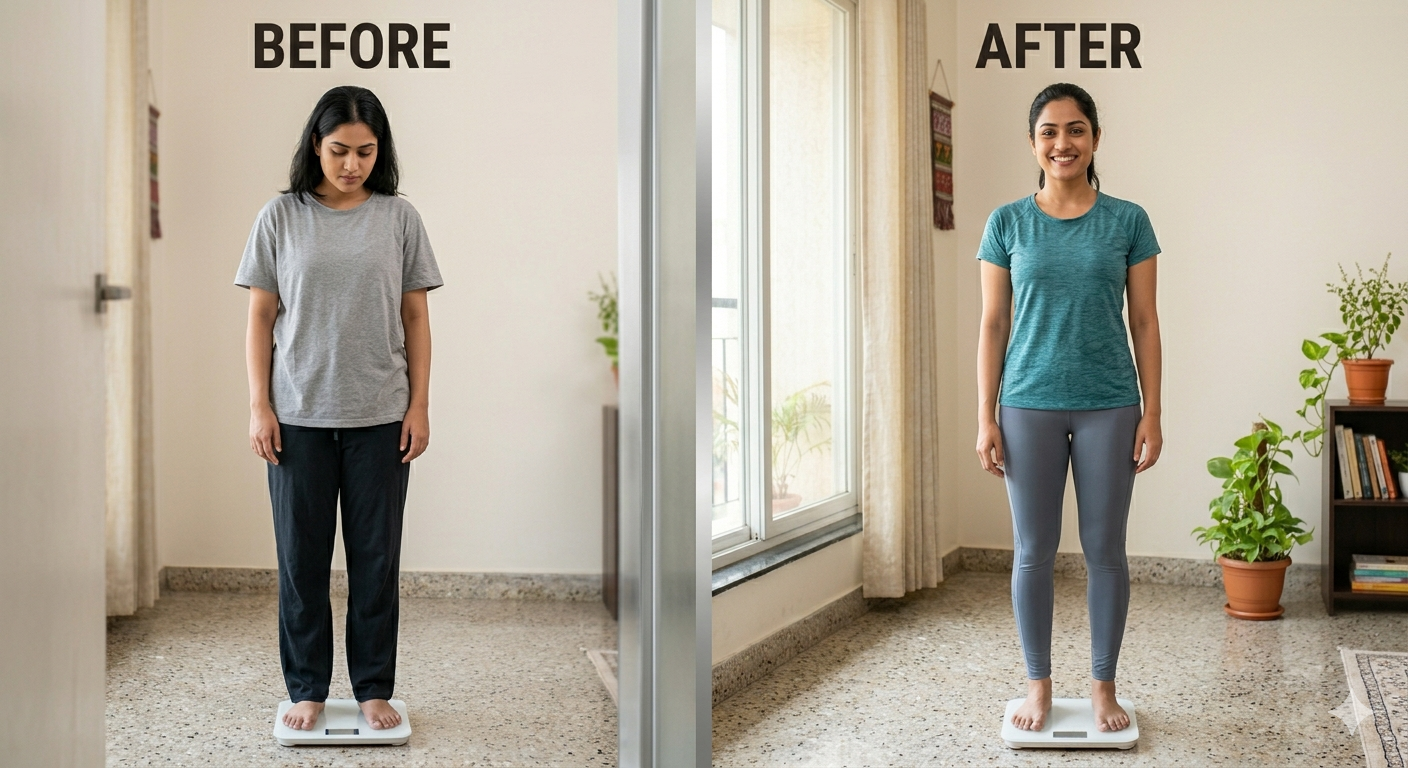
[Image Suggestion: A person standing on a scale looking happy, or a flat-lay of healthy colorful vegetables and a measuring tape.] Alt Text: How to lose 5kg in 1 month successfully and safely
2. The Math of Weight Loss: Understanding Calories
Weight loss is essentially a math problem, though your hormones definitely have a vote. To lose 1kg of body fat, you need a deficit of roughly 7,700 calories.
To lose 5kg, you’re looking at a total deficit of 38,500 calories over the month. This sounds like a lot, but when you break it down into daily bites, it becomes manageable.
Creating the Deficit
You achieve this through a combination of eating less (input) and moving more (output). If you cut 700 calories from your daily food intake and burn an extra 500 calories through movement, you are right on track for that 5kg goal.
3. The “Plate Reset”: What to Eat to Drop Weight Fast
When people ask how to lose 5kg in 1 month, they usually expect me to say “stop eating.” Actually, you need to eat more—more of the right stuff.
Prioritize Protein
Protein is the king of macronutrients. It has a high thermic effect, meaning your body burns more calories just digesting protein than it does fats or carbs. Plus, it keeps you full. Think chicken breast, tofu, eggs, and Greek yogurt.
Ditch Liquid Calories
This is the easiest win. Sodas, fancy lattes, and even “healthy” fruit juices are sugar bombs. If you swap your daily 400-calorie caramel macchiato for black coffee or tea, you’ve already won half the battle.
The “Half-Plate” Rule
For every meal, fill half your plate with non-starchy vegetables (spinach, broccoli, peppers). Fill a quarter with protein and the last quarter with complex carbs (sweet potato, quinoa).
4. Hydration: Your Secret Weapon for Fat Loss
If you are dehydrated, your metabolism slows down to a crawl. Your body also frequently confuses thirst with hunger.
When you feel that 3:00 PM craving for a snack, drink a large glass of water first. Wait 15 minutes. Most of the time, the craving disappears.
The Cold Water Hack
Drinking cold water can slightly increase your metabolic rate because your body has to spend energy to warm the water up to body temperature. It’s not a miracle, but every calorie counts when you’re figuring out how to lose 5kg in 1 month.
5. The Workout Strategy: Efficiency Over Duration
You don’t need to spend two hours in the gym. In fact, if you’re trying to lose weight in a month, you shouldn’t. Overtraining leads to injury and extreme hunger.
HIIT (High-Intensity Interval Training)
HIIT is your best friend. 20 minutes of alternating between sprinting and walking burns more fat than an hour of steady jogging. It also creates an “afterburn effect,” where your metabolism stays elevated for hours after you finish.
NEAT: The Secret Ingredient
NEAT stands for Non-Exercise Activity Thermogenesis. This is the energy you burn doing everything except sleeping, eating, or sports-like exercise. Pacing while on the phone, taking the stairs, and cleaning the house all count.
Increase your daily step count to 10,000, and you’ll be amazed at how much faster that 5kg disappears.
6. Sleep and Stress: The Hidden Weight Loss Killers
You can have the perfect diet, but if you’re only sleeping 4 hours a night, your body will cling to its fat stores.
When you’re sleep-deprived, your levels of cortisol (the stress hormone) and ghrelin (the hunger hormone) skyrocket. You’ll find yourself reaching for cookies and chips because your brain is desperately searching for a quick hit of energy.
Aim for 7–8 hours of quality sleep. It’s the easiest part of learning how to lose 5kg in 1 month—literally just lying there!
7. Step-by-Step 4-Week Action Plan
Here is your roadmap. No fluff, just action.
Week 1: The Cleanse
- Goal: Remove all processed sugars and alcohol.
- Focus: Drink 3 liters of water daily.
- Activity: 30-minute brisk walk every day.
Week 2: The Intensity Boost
- Goal: Introduce Intermittent Fasting (16/8 window).
- Focus: Ensure every meal has at least 30g of protein.
- Activity: Add 3 sessions of 20-minute HIIT.
Week 3: The Refinement
- Goal: Cut back on “heavy” carbs like pasta and bread; replace with veggies.
- Focus: Monitor sodium intake to reduce bloating.
- Activity: Increase steps to 12,000 per day.
Week 4: The Final Push
- Goal: Stay consistent. No “cheat days” this week.
- Focus: Get 8 hours of sleep.
- Activity: Daily movement plus 2 full-body strength training sessions.
8. Common Mistakes to Avoid at All Costs
Even with a perfect guide on how to lose 5kg in 1 month, people trip up on these common hurdles:
- Starvation Diets: If you eat too little, your body goes into “survival mode” and slows your metabolism to protect you.
- Overestimating Exercise: You cannot “burn off” a 1,000-calorie burger with a 30-minute jog. You’d have to run a half-marathon!
- The “All or Nothing” Mentality: If you eat one cookie, don’t throw away the whole day. Just make the next choice a healthy one.
- Relying on the Scale Alone: Muscles are denser than fat. Sometimes the scale doesn’t move, but your clothes fit better. Use a measuring tape too!
9. Real-Life Example: From Sluggish to Sizzling
Meet James. James was a typical office worker who found himself 10kg overweight after a stressful year. He decided to follow the principles of how to lose 5kg in 1 month.
He didn’t join a fancy gym. He started by walking to work and prepping his lunches (mostly chicken salads and quinoa bowls). In the first week, he lost 2kg—mostly water, but it gave him the “win” he needed. By the end of week four, he was down 5.2kg.
His secret? He didn’t focus on the 5kg; he focused on the daily habits.
10. Conclusion: Your Journey Starts Now
Learning how to lose 5kg in 1 month isn’t about finding a magic shortcut. It’s about committing to a month of discipline, better choices, and self-care.
By prioritizing protein, staying hydrated, moving your body daily, and getting enough sleep, you aren’t just losing weight—you’re upgrading your entire lifestyle. You’ll wake up with more energy, your skin will look clearer, and yes, those jeans will finally zip up comfortably.
Are you ready to take the challenge? Start today by drinking an extra liter of water and planning your meals for tomorrow. You’ve got this!
11. FAQs
Can I lose 5kg in a month without exercise?
It is possible through a strict caloric deficit, but it’s much harder. Exercise allows you to eat a bit more while still losing weight, which makes the plan more sustainable.
Will I gain the weight back immediately?
Not if you transition into a “maintenance phase.” Don’t go back to your old habits on day 31. Slowly increase your calories while keeping your new activity levels.
Is it okay to skip breakfast?
Yes! Many people find that skipping breakfast (Intermittent Fasting) makes it easier to stay within their calorie budget for the rest of the day.
What is the best protein source for fast weight loss?
Lean sources like white fish, chicken breast, egg whites, and plant-based options like lentils or seitan are excellent for keeping you full on fewer calories.
Can I drink diet soda?
While it has zero calories, some studies suggest artificial sweeteners can increase cravings for sweets. Stick to water or sparkling water with lemon if you can.