
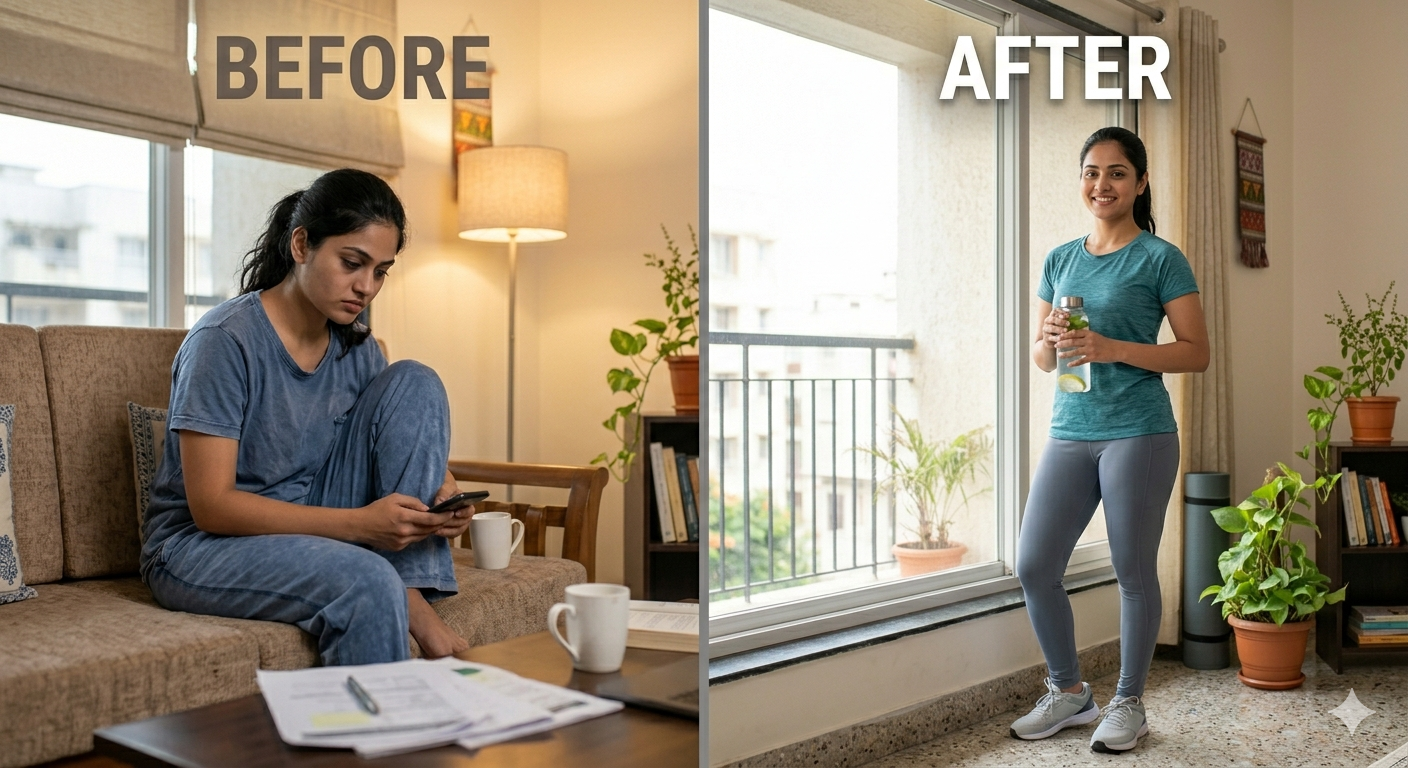
Starting a fitness journey often feels like signing up for a second full-time job. You’re counting every almond, weighing chicken breasts, and obsessing over Tupperware. But what if the secret to a healthier life wasn’t about what you ate, but when you ate?
Welcome to the world of Intermittent Fasting (IF). If you’ve been feeling sluggish, struggling with stubborn weight, or simply tired of the “six small meals a day” myth, you’re in the right place. This Intermittent Fasting Guide for Beginners is designed to cut through the noise and give you a sustainable, human-friendly roadmap to success.
Meta Description:
Master your health with this Intermittent Fasting Guide for Beginners. Learn the best methods, avoid common mistakes, and see real results starting today!
Table of Contents
1. What is Intermittent Fasting, Anyway?
Let’s get one thing straight: Intermittent fasting isn’t a “diet” in the traditional sense. It’s an eating pattern. It doesn’t tell you to stop eating carbs or live on kale smoothies (unless you want to).
Instead, it’s about cycling between periods of eating and periods of fasting. Think of it as a scheduled break for your digestive system. Humans have actually been doing this for millennia—not always by choice, but because our ancestors didn’t have 24/7 access to refrigerators.
2. How Does it Actually Work? (The Science)
When you eat, your body spends several hours processing that food, burning what it can, and storing the rest as fat. Your insulin levels spike, which tells your body to stay in “storage mode.”
When you fast, your body doesn’t have a recent meal to use as energy. Consequently, it reaches into your fat stores to keep things running.
The Magic of Autophagy
One of the coolest parts of this Intermittent Fasting Guide for Beginners is a process called autophagy. This is your body’s way of “cellular spring cleaning.” It breaks down old, damaged proteins and cells, essentially recycling them for energy. It’s like a biological reset button.
3. Popular Intermittent Fasting Methods
There isn’t a one-size-fits-all approach. Here are the most popular ways to get started:
The 16/8 Method (The Fan Favorite)
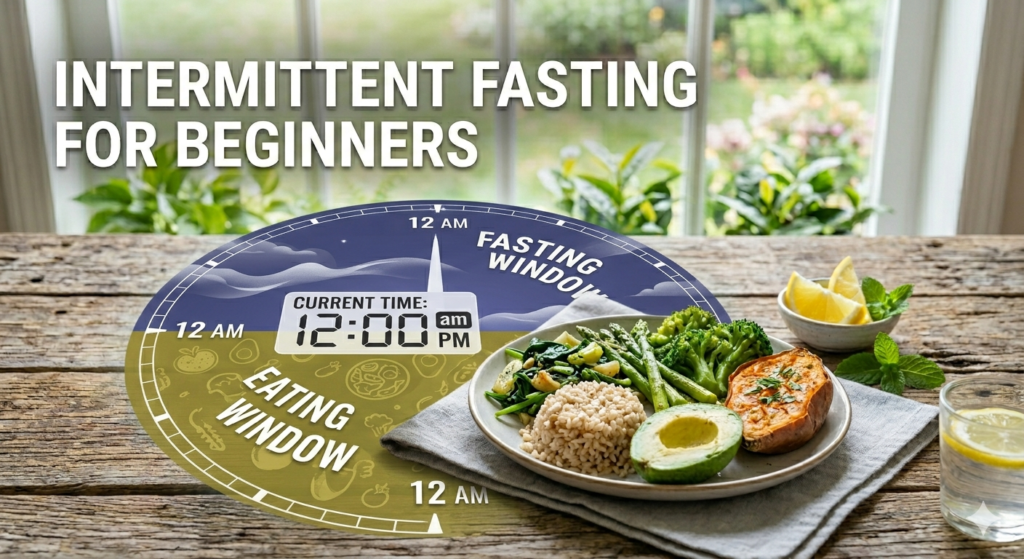
You fast for 16 hours and eat during an 8-hour window. For example, you eat between 12:00 PM and 8:00 PM. This is usually the easiest for beginners because you’re asleep for half of the fast anyway!
The 5:2 Diet
You eat normally for five days a week and restrict your calories to about 500–600 for the remaining two days.
Eat-Stop-Eat
This involves a full 24-hour fast once or twice a week. It’s a bit more advanced, so maybe don’t start here on day one.
4. The Incredible Benefits of IF
Why are people so obsessed with this? It’s not just about fitting into your old jeans (though that’s a nice perk).
- Weight Loss: By reducing the time window for eating, you naturally consume fewer calories.
- Mental Clarity: Many practitioners report a “brain fog” lifting once they adapt.
- Insulin Sensitivity: Lowering insulin levels can significantly reduce the risk of Type 2 diabetes.
- Heart Health: It can improve blood pressure and cholesterol levels.
5. A Step-by-Step Guide to Your First Week
Ready to dive in? Don’t just stop eating tomorrow morning. Follow this plan:
Day 1-3: The Transition
Start with a 12-hour window. If you finish dinner at 8:00 PM, don’t eat breakfast until 8:00 AM. Get used to the feeling of not snacking before bed.
Day 4-5: Pushing the Window
Move your breakfast back by one hour each day. 9:00 AM, then 10:00 AM.
Day 6-7: The 16/8 Launch
Try your first 16-hour fast. Skip breakfast, have a productive morning, and enjoy a big, nutritious lunch at noon.
6. What to Eat and Drink While Fasting
This is the number one question in any Intermittent Fasting Guide for Beginners.
During the Fast:
- Water: Stay hydrated! Sparking water is great too.
- Black Coffee: No sugar, no cream. (Yes, you’ll get used to it).
- Plain Tea: Green or black tea is fine.
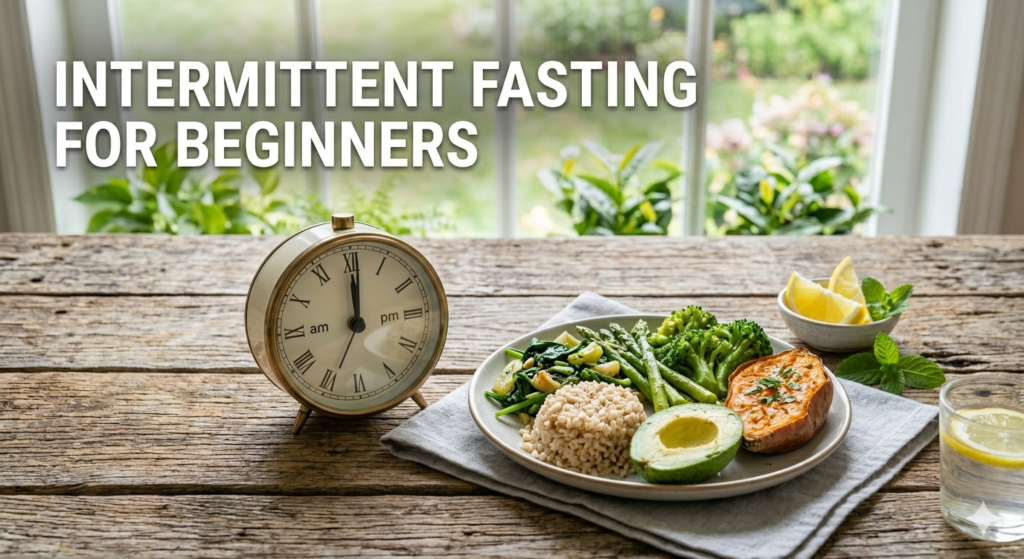
During the Eating Window: Focus on protein, healthy fats, and fiber. If you break your fast with a giant bowl of sugary cereal, you’re going to crash hard. Think chicken, avocado, nuts, and plenty of greens.
7. Common Mistakes to Avoid
- Diving in too fast: Jumping straight to a 24-hour fast is a recipe for a “hangry” disaster.
- Overeating in the window: Fasting isn’t a license to eat three pizzas. Quality still matters.
- Not drinking enough water: Often, when you think you’re hungry, you’re actually just thirsty.
- Ignoring your body: If you feel dizzy or genuinely unwell, eat something!
8. Real-Life Success: What to Expect
Meet Sarah. She’s a 34-year-old marketing manager who struggled with afternoon energy crashes. She started the 16/8 method using this Intermittent Fasting Guide for Beginners.
Within three weeks, her energy stabilized. She didn’t need that 3:00 PM sugary latte anymore. Within three months, she lost 12 pounds without ever stepping foot in a gym. It wasn’t magic; it was just giving her body time to process its own energy.
9. FAQs
Can I exercise while fasting?
Absolutely! In fact, “fasted cardio” can help burn fat faster. Just listen to your body and keep some electrolytes handy
Will fasting mess up my metabolism?
Contrary to the “starvation mode” myth, short-term fasting can actually boost your metabolism by increasing norepinephrine levels.
Can women do intermittent fasting?
Yes, but some women find they need a more relaxed window (like 14/10) to keep their hormones happy.
Can I use Stevia in my coffee?
Technically, most experts say a tiny bit of stevia won’t break your fast, but if you want the full benefits of autophagy, stick to black.
Can I exercise while fasting?
Just shift your window! That’s the beauty of IF—it’s flexible. If you’re eating late, just start your fast later the next day.
10. Conclusion
Intermittent fasting isn’t a punishment; it’s a tool to help you live a better, more vibrant life. By following this Intermittent Fasting Guide for Beginners, you’re taking the first step toward a simpler relationship with food.
Remember, consistency beats perfection every single time. If you slip up and have a midnight snack, don’t beat yourself up. Just start your timer again tomorrow.